
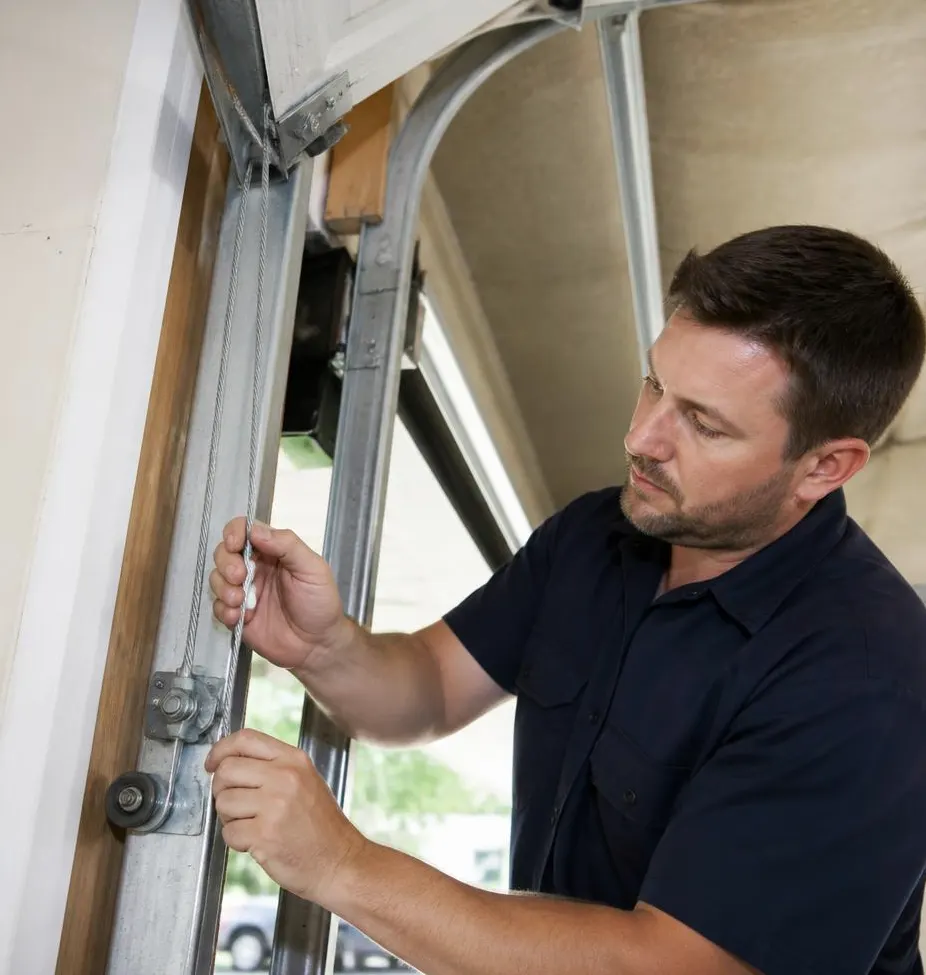
The Moment You Notice It
It's usually the first real cold snap or the first rain of the season that gives it away. You hit the opener on your way out and the door groans instead of gliding, or it shudders halfway up like it's fighting something. Maybe you notice a thin line of water creeping under the door after an overnight rain, or a layer of fine dust that's turned to grit along the bottom track. After a long, dry stretch, that first storm has a way of exposing every small problem your garage door has been hiding since spring.
Winter in this part of the Inland Empire isn't dramatic, but it is a real shift: months of dust and dry heat give way to rain, cooler mornings, and more moisture sitting in a garage that spent the summer baking. That shift is exactly what causes most of the calls garage door companies get this time of year.
Clear Out the Summer's Dust Before It Turns to Grime
San Bernardino summers leave a fine layer of dust and sometimes wildfire smoke residue on everything, including your garage door tracks, rollers, and hinges. Once the rain starts, that dust mixes with moisture and turns into a gritty paste that grinds down rollers and makes the door work harder than it should.
- Wipe down the tracks with a damp cloth to remove built-up dust before it gets wet.
- Check rollers and hinges for a dry, chalky look, a sign the old lubricant has worn off.
- Apply a garage-door-specific lithium or silicone lubricant to rollers, hinges, and the torsion spring. Skip household oils like WD-40 for this; they attract more dust than they repel.
Check the Weatherstripping and Bottom Seal
The rubber seal along the bottom of the door and the weatherstripping around the frame take a beating from UV exposure during the dry months. By late fall, it's common to find cracking, flattening, or gaps where the seal has pulled away from the panel.
- Look for daylight gaps along the bottom edge when the door is closed.
- Press the seal with your thumb; if it feels stiff or brittle instead of pliable, it's due for replacement.
- Replacing a bottom seal is a straightforward DIY job for most doors and a cheap way to keep rainwater and cold drafts out of the garage.
Pay Attention to How the Door Moves in the Cold
Metal contracts in cooler temperatures, and that includes torsion springs and the metal tracks your door relies on. A door that ran smoothly in August can suddenly feel heavier or slower to respond once mornings dip into the 40s. If you notice the opener straining, reversing unexpectedly, or the door closing slower than usual, that's often a sign the spring tension needs adjusting for the season, not a sign the opener itself is failing.
This is also a good time to test the auto-reverse safety feature. Place a block of wood in the door's path and close it. It should reverse immediately on contact. If it doesn't, that's not a wait-and-see problem.
Look at the Opener and Sensors
Condensation can form inside the opener housing and around the photo-eye sensors near the bottom of the track, especially after the first cold, damp nights. If your door has started refusing to close, blinking its sensor lights, or reversing for no obvious reason, check that the sensor lenses are clean and properly aligned before assuming the worst. A light wipe-down and realignment solves this more often than people expect.
Don't Forget the Bigger Picture
If your home has had any seismic retrofitting work done, it's worth a quick visual check that the garage door track brackets and wall anchors are still firmly seated. Older homes in this area sometimes have garage framing that's been reinforced separately from the door hardware, and it's easy for the two to drift out of alignment over time without anyone noticing until the door starts binding.
When to Call San Bernardino Garage Door Service
If you've gone through the basics and the door still struggles, hesitates, or makes a grinding or popping sound when it moves, that's the point to call in a technician rather than keep adjusting things yourself. Our team handles garage door maintenance visits that cover a full inspection of springs, cables, rollers, and opener function, and we also handle spring replacement when tension has dropped to the point where the door is unsafe to operate. Catching it now, before the rain really sets in, is a lot easier than dealing with a stuck door during a storm.
If your garage door is giving you any of these warning signs, call San Bernardino Garage Door Service today and get it sorted before winter weather makes the job harder.